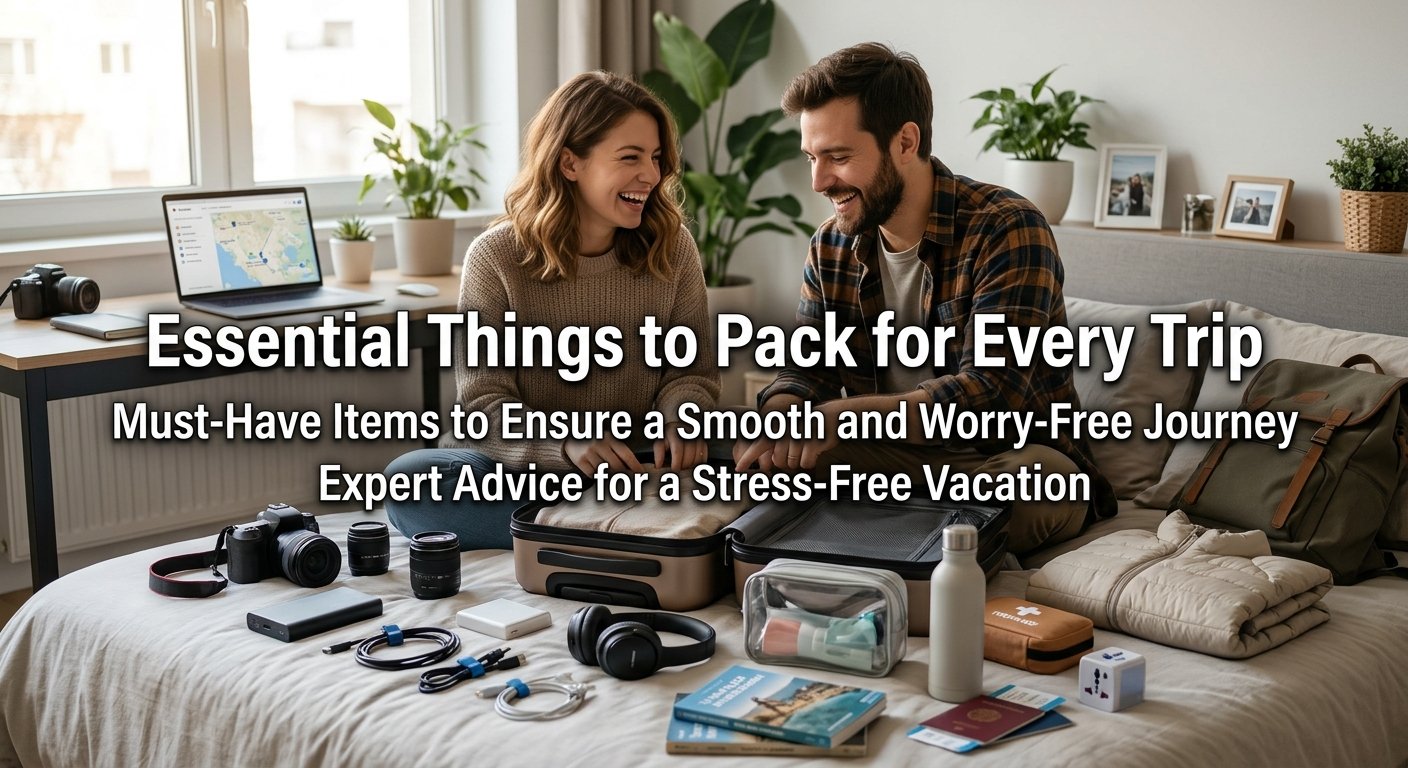
Packing is one of the most important parts of preparing for a successful trip. Whether you are planning a short weekend getaway, a family vacation, a business trip, or an international adventure, carrying the right items can make your journey more comfortable and stress-free. Many travelers feel confused about what to pack, how much luggage to carry, and which items are truly necessary. Some people pack too many unnecessary belongings, while others forget important essentials that they need during their journey.
Creating a proper travel packing checklist can help you organize everything before leaving home. Instead of packing randomly, you can prepare according to your destination, weather conditions, travel duration, and planned activities. Having essential items ready also reduces the chances of spending extra money on things you could have brought from home.
The best travel packing strategy is to focus on comfort, convenience, safety, and organization. You should carry enough clothing, personal care products, important documents, electronic accessories, and other useful items without making your luggage unnecessarily heavy.
In this complete guide, we will discuss the essential things to pack for every trip, including clothing, toiletries, travel documents, electronics, medicines, safety items, and useful accessories. These practical packing tips will help beginners and experienced travelers prepare for a smooth and enjoyable journey.
1. Comfortable Clothing for Your Destination
Clothing is one of the first things to consider when preparing your travel luggage. The type and quantity of clothing you need will depend on your destination, weather conditions, travel duration, and planned activities.
Before packing, check the weather forecast for your destination. If you are visiting a warm location, choose lightweight and breathable clothes that help you stay comfortable. For colder destinations, pack warm sweaters, jackets, comfortable trousers, and other suitable winter clothing.
Try to select clothes that can be mixed and matched easily. Neutral colors and simple outfits can help you create different combinations without carrying too many items.
For a short trip, you may only need a few everyday outfits and one additional set of clothing. For longer vacations, plan your clothing according to the number of days and whether laundry facilities will be available.
Always include comfortable clothes for traveling, especially if you have a long journey. Avoid packing items that are uncomfortable or unsuitable for your planned activities.
2. Essential Travel Documents
Travel documents are among the most important things to pack because you may need them at airports, hotels, transportation stations, and other locations.
For domestic travel, carry the identification documents required for your journey. For international trips, you may need a valid passport, visa, flight tickets, hotel reservation details, and other documents depending on your destination.
Keep your important documents together in a secure travel pouch or document organizer. This makes it easier to find them whenever necessary.
It is also useful to create digital copies of important documents and store them securely on your phone or in a protected online account.
Before leaving home, check your passport validity, visa requirements, and booking confirmations. Different countries have different entry requirements, so always verify the latest official information before traveling.
Keeping your documents organized can save time and prevent unnecessary problems during your trip.
3. Toiletries and Personal Care Products
Personal hygiene products are essential for maintaining comfort and cleanliness during travel. Instead of purchasing everything at your destination, prepare a small toiletry bag containing the items you regularly use.
Your basic travel toiletries may include a toothbrush, toothpaste, shampoo, soap, face wash, deodorant, hairbrush, and other personal care products.
You can use travel-sized containers to save space in your luggage. Small bottles are particularly useful for short trips because they reduce weight and make packing easier.
Remember to pack items according to your personal requirements. If you use specific skincare or haircare products, include the necessary essentials.
For air travel, check the airline and airport rules regarding liquids, gels, and toiletries in hand luggage. Liquid restrictions can vary depending on the airport and route.
Keep your toiletries in a separate waterproof pouch to prevent accidental spills from damaging your clothes and other belongings.
4. Comfortable Shoes and Footwear
Choosing the right footwear can make a significant difference to your travel experience. During vacations, you may spend several hours walking, exploring tourist attractions, shopping, or participating in outdoor activities.
Comfortable walking shoes should be one of your main packing priorities. Choose footwear that fits properly and is suitable for the activities you have planned.
If you are visiting a beach destination, sandals or slippers may be useful. For mountain trips and outdoor adventures, suitable walking or hiking shoes can provide better comfort and support.
You do not need to pack too many pairs of shoes. Select a few practical options that match your clothing and destination.
It is also a good idea to avoid wearing brand-new shoes for long walks during your vacation. Comfortable, familiar footwear can help make your journey easier.
5. Mobile Phone and Charger
Your mobile phone is one of the most useful travel accessories. It helps you communicate with family, access maps, check bookings, take photographs, and search for important travel information.
Before leaving, fully charge your phone and pack its charger. If you are traveling internationally, check whether you need a compatible power adapter for your destination.
Save important information on your device, including hotel addresses, booking confirmations, transportation details, and emergency contacts.
You should also download offline maps of your destination so you can navigate when internet access is unavailable.
Keep your phone protected with a suitable case and screen protector. If you are traveling to an area with unpredictable weather, consider additional protection against water and dust.
A charged and properly prepared phone can make your entire travel experience more convenient.
6. Power Bank and Electronic Accessories
A power bank is a useful travel accessory, especially during long journeys and sightseeing activities. It allows you to recharge your phone when electrical outlets are unavailable.
Choose a reliable power bank with sufficient capacity for your devices. Before flying, check airline rules regarding power banks and spare lithium batteries. They generally need to be carried in cabin baggage rather than checked luggage, but specific limits and requirements may apply.
Other useful electronic accessories may include:
- Mobile phone charger
- USB charging cable
- Universal travel adapter
- Earphones or headphones
- Camera charger
- Memory card
- Laptop charger, if needed
You do not need to carry every electronic accessory you own. Select only the items required for your journey.
Keep your cables and chargers organized in a small electronic accessories pouch. This prevents them from getting tangled or lost inside your luggage.
7. Basic First Aid and Personal Medicines
Health-related essentials are important when traveling because you may not always have immediate access to the products you normally use.
A small personal first-aid kit can include basic items such as adhesive bandages, antiseptic wipes, and other suitable first-aid supplies.
If you regularly use prescribed medicines, carry enough for your trip along with a little extra in case of travel delays. Keep medicines in their original packaging and follow the instructions provided by your healthcare professional.
For international travel, check the destination country’s rules regarding bringing medicines across its borders. Some medicines may require additional documentation.
You should also consider your destination’s climate and planned activities when preparing your personal health supplies.
Keep essential medicines in your hand luggage when appropriate, rather than placing everything in checked baggage.
Being prepared with basic health essentials can help you manage minor travel-related needs more conveniently.
8. Travel Backpack or Day Bag
A comfortable backpack or day bag is useful for carrying your daily essentials while exploring a destination.
You can use it to carry your phone, wallet, water bottle, sunglasses, snacks, travel documents, and other small belongings.
Choose a lightweight bag with comfortable shoulder straps and enough compartments to keep your items organized.
A bag with secure closures can also help protect your belongings in crowded tourist areas.
For longer trips, you may need a larger suitcase for clothing and other belongings, while a smaller backpack can be used for everyday activities.
Avoid carrying unnecessary items in your day bag because a heavy backpack can become uncomfortable during long walks.
A well-organized travel bag makes sightseeing, shopping, and transportation much easier.
9. Wallet, Cash, and Payment Cards
Managing your money properly is another important part of travel preparation. Carry enough cash for small purchases, local transportation, and situations where electronic payments are unavailable.
You can also carry suitable payment cards if they are accepted at your destination.
Before international travel, research the local currency and available payment methods. Check your bank’s international transaction charges and any relevant card restrictions.
Avoid keeping all your money in one place. Organize your cash and payment cards securely to reduce the inconvenience of losing your wallet.
It is also useful to keep a small amount of emergency cash separate from your everyday spending money.
For a more organized trip, prepare a simple daily spending budget and monitor your expenses throughout the journey.
10. Weather Protection Essentials
Weather conditions can change during travel, so packing suitable protection is important.
If you are visiting a rainy destination, consider carrying a compact umbrella or lightweight rain jacket. These items can help you stay comfortable during unexpected rainfall.
For sunny destinations, useful items include sunglasses, a suitable hat, and sunscreen. These can help protect you during outdoor activities.
For cold destinations, pack warm clothing, gloves, scarves, and other weather-appropriate accessories.
If you are planning outdoor activities, check the local weather forecast before departure and adjust your packing list accordingly.
Avoid carrying unnecessary weather-related accessories. Choose practical items based on the actual conditions expected during your trip.
11. Reusable Water Bottle
Staying hydrated is important during every journey, especially when walking, sightseeing, or spending time outdoors.
A reusable water bottle is a practical travel item because you can refill it whenever suitable clean drinking water is available.
Choose a lightweight, leak-resistant bottle that fits easily into your backpack or day bag.
Before traveling, check whether drinking water is readily available at your destination. In some places, you may need to purchase bottled water or use an appropriate water treatment option.
For air travel, remember that airport security restrictions may apply to liquids in hand luggage. An empty reusable bottle is often a convenient option to carry through security and refill afterward where facilities are available.
Using a reusable bottle can also reduce unnecessary plastic waste during your vacation.
12. Sunglasses and Sun Protection
Sunglasses are useful accessories for destinations with bright sunlight. They can make outdoor activities more comfortable and help protect your eyes from ultraviolet radiation when you choose sunglasses with proper UV protection.
Along with sunglasses, consider packing sunscreen suitable for your skin and the activities you plan to enjoy.
A lightweight hat or cap can provide additional shade during outdoor sightseeing.
If you are visiting a beach, desert, or mountain destination, sun protection becomes especially important because exposure conditions may vary.
Keep your sunglasses in a protective case to prevent scratches or accidental damage.
These small accessories take up very little luggage space but can make a noticeable difference during outdoor activities.
13. Travel-Sized Laundry Supplies
For longer vacations, small laundry supplies can be surprisingly useful.
You may want to carry a few laundry detergent sheets, a small amount of suitable detergent, and a lightweight laundry bag for separating used clothes.
These items can help you manage your clothing during extended trips, especially when laundry facilities are limited.
A separate bag for dirty clothes also helps keep your clean clothing organized.
If you are staying in accommodation with laundry facilities, you may not need to carry additional laundry products.
Packing a few practical laundry essentials can reduce the amount of clothing you need to carry and help keep your luggage organized.
14. Snacks and Light Food Items
Carrying a few snacks can be helpful during long journeys, especially when food options are limited or transportation schedules are unpredictable.
You can pack suitable packaged snacks, nuts, biscuits, or other convenient food items according to your dietary needs.
For road trips, snacks can make travel breaks more convenient. For flights, always check airline and airport rules regarding food items, particularly when traveling internationally.
Choose foods that are easy to carry and do not require special storage conditions.
Avoid carrying too much food because it can take up valuable luggage space and may become unnecessary once you reach your destination.
A few simple snacks can help you stay comfortable between regular meals.
15. Notebook and Pen
Although smartphones are useful for storing travel information, a small notebook and pen can still be practical items.
You can use them to write down important addresses, emergency contact details, shopping lists, daily expenses, and travel notes.
A notebook can also become a personal travel journal where you record interesting experiences, memorable places, and useful information about your destination.
If your phone battery runs out or electronic access becomes inconvenient, having written information can be helpful.
Choose a small notebook that does not take up much space in your luggage.
It is a simple item, but it can be useful in many travel situations.
16. Personal Safety and Security Items
Safety should always be an important part of your travel preparation. Carrying a few practical security items can help you protect your belongings and important documents.
Consider using a luggage lock where appropriate, a secure travel pouch, and luggage tags with suitable contact information.
You can also use small organizers to keep your wallet, documents, and valuable items separate from ordinary luggage.
Before choosing any security accessory, check the transportation provider’s rules and make sure the item is permitted.
Avoid displaying expensive belongings unnecessarily in crowded public areas. Keep your bags close to you and remain aware of your surroundings.
If you are staying in a hotel, use the available security facilities where appropriate.
Good security habits are often more important than carrying many additional accessories.
17. Camera and Photography Accessories
If you enjoy photography, carrying a camera can help you capture beautiful memories of your vacation.
However, a separate camera is not essential for every traveler. Modern smartphones can take excellent photographs and may be enough for ordinary travel photography.
If you decide to bring a camera, remember to pack its charger, memory cards, batteries, and a protective carrying case.
For outdoor photography, a small tripod may be useful if it is permitted at your destination.
Avoid carrying too much photography equipment if you are planning a simple sightseeing trip.
Choose equipment according to your interests and the type of photographs you want to capture.
Most importantly, enjoy the actual experience instead of focusing entirely on taking pictures.
18. Organize Your Luggage with Packing Cubes
Keeping your luggage organized can make packing and unpacking much easier. Packing cubes are useful accessories that help divide your belongings into separate sections.
You can use different cubes for shirts, trousers, undergarments, accessories, and other clothing items.
This organization makes it easier to find specific belongings without searching through your entire suitcase.
Small waterproof pouches can also be useful for toiletries and other items that may leak.
Another helpful strategy is to keep your frequently used items in easily accessible compartments.
You do not need expensive organizers to manage your luggage. Simple cloth bags and small pouches can also work effectively.
Organized luggage saves time and helps you maintain a cleaner travel space.
19. Prepare a Separate Carry-On Bag
If you are traveling by airplane, a separate carry-on bag can help you keep important items accessible during your journey.
Your carry-on may contain travel documents, your phone, charger, essential medicines, a water bottle, headphones, and a change of clothes if needed.
Keep valuable and important items with you rather than placing them in checked luggage.
Before packing, check your airline’s rules regarding cabin baggage size, weight, prohibited items, and liquid restrictions.
Make sure your carry-on bag is comfortable to carry and does not contain unnecessary belongings.
A properly organized carry-on can make airport procedures and long flights more convenient.
20. Create a Travel Packing Checklist Before Departure
One of the easiest ways to avoid forgetting important items is to create a travel packing checklist before departure.
A checklist allows you to organize your belongings according to different categories and confirm that everything is ready.
You can divide your list into clothing, documents, toiletries, electronics, health essentials, and personal accessories.
Start preparing your luggage a few days before traveling instead of waiting until the last moment.
Once you have packed an item, mark it as completed. This simple habit can reduce stress and help you identify anything that is still missing.
Before leaving home, perform a final check of your luggage, documents, accommodation details, and transportation bookings.
Remember that every trip is different, so adjust your packing checklist according to your destination, weather, travel duration, and personal requirements.
Conclusion
Packing the right items is an important part of planning a comfortable and successful vacation. Whether you are traveling for a few days or several weeks, having the essential things ready can help you avoid unnecessary problems and enjoy your journey with confidence.
Start by preparing suitable clothing, important travel documents, toiletries, comfortable shoes, electronic accessories, and personal medicines. Do not forget useful items such as a reusable water bottle, power bank, travel backpack, sunglasses, and a basic first-aid kit.
The key to successful packing is choosing practical belongings rather than carrying everything you own. Organize your luggage, prepare a separate carry-on bag when necessary, and create a checklist before departure.
Every destination has different requirements, so always consider the weather, local conditions, transportation rules, and planned activities when preparing your luggage.
With proper preparation and smart packing habits, you can make your next journey more organized, comfortable, and enjoyable. Pack wisely, travel confidently, and focus on creating wonderful memories wherever your journey takes you.
URL Slug: /essential-things-to-pack-for-every-trip/
Leave a Reply